
Business Tax Accountant San Antonio AlternativeClose the books before the return
San Antonio filings come in an order: the city pieces first, the May franchise report from the closed year, the federal return last. Owners who flip that order spend the spring unwinding it. Steven Palmieri, as the Tax CFO, closes the months, so each filing lands on the one before it.

Tell us about the close
A name and a phone are enough to start.

You will be talking to the Steven Palmieri practice.

Two paths, one close
A city sales report and the franchise page are built from the same closed months. We read them the same way.
Click to see which filing ›Tap to see which filing ›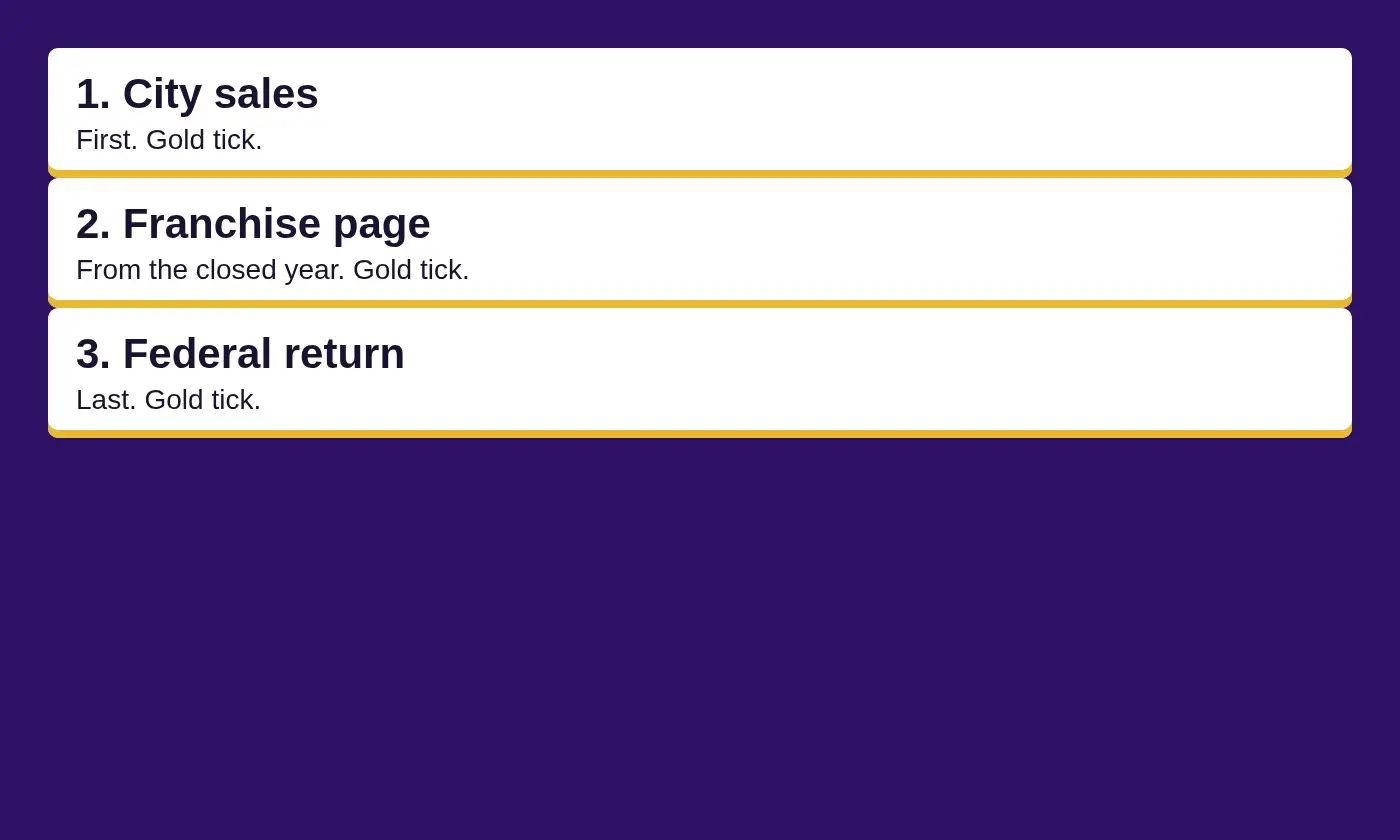
The order
City pieces first, the franchise page from the closed year, the federal return last. The order is the whole trick.
Click to see the order ›Tap to see the order ›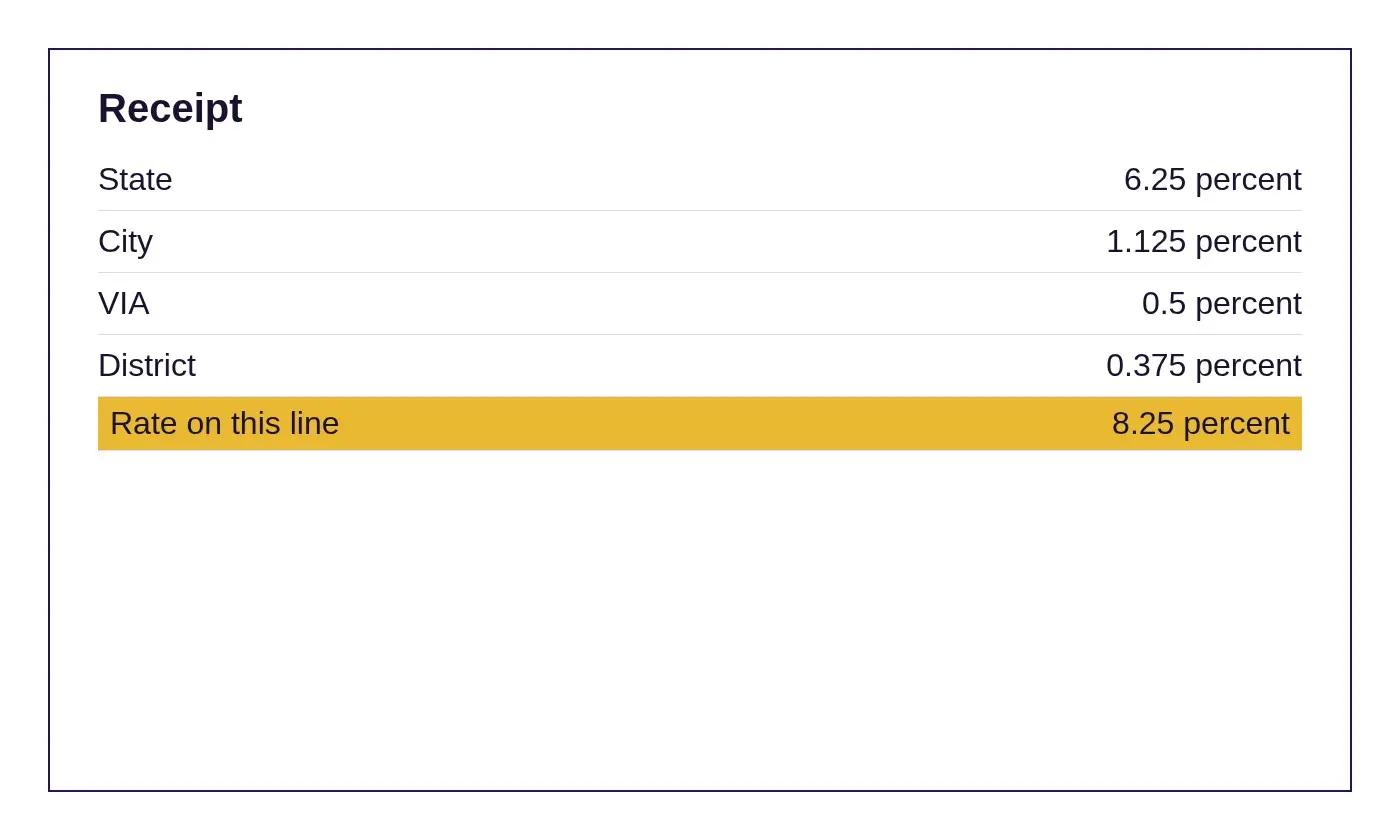
City rate or ESD rate
Inside the limits a receipt adds to 8.25 percent. A district levy can replace the city piece past the limit. The address decides, every time.
Click to compare the rates ›Tap to compare the rates ›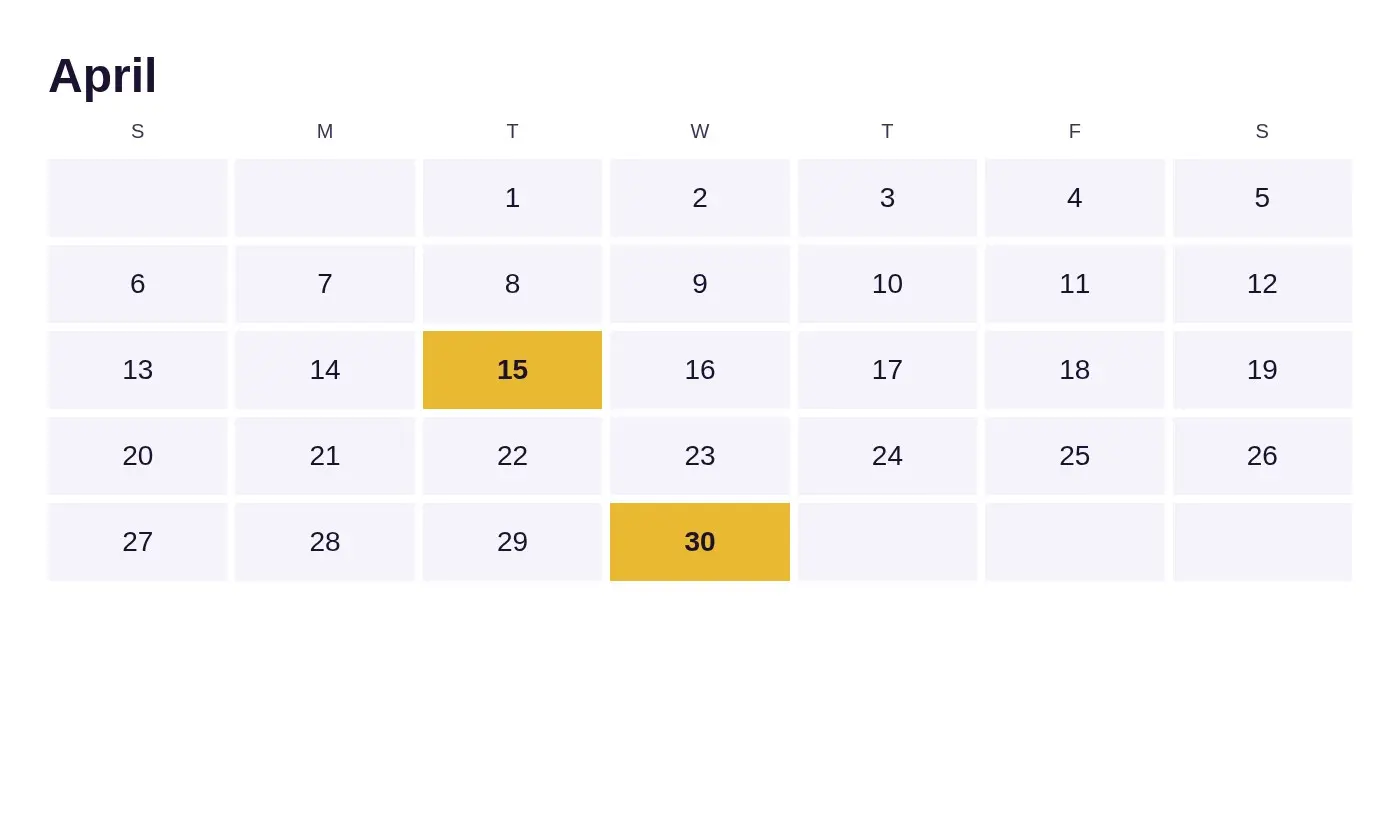
April holds two clocks
A property rendition is due on 15 April unless a written request moves it to 15 May. A protest is the second clock, and an owner can file it even when the new appraisal notice has not arrived. We copy both from books that were already closed.
Click to open the May page ›Tap to open the May page ›Every Texan knows the River Walk runs a level under the street and only works because the two paths meet. We work with San Antonio owners by video from Dallas, and the filings meet the same way, in order.
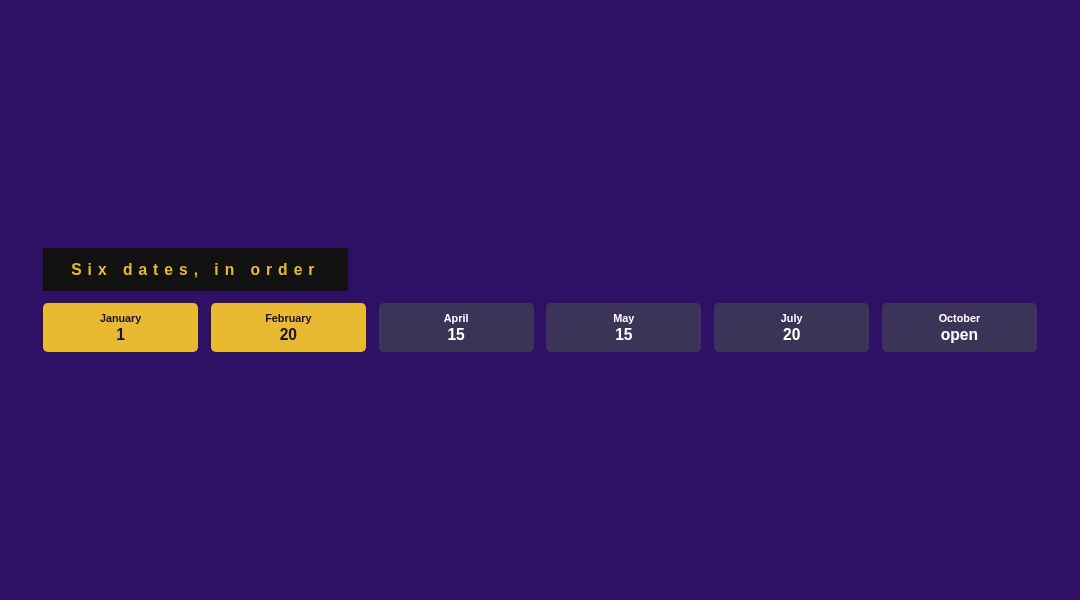
Six dates we watch with owners in San Antonio
Open one date. The note is the filing a loud month must not skip.
1January
San Antonio's district slice became 0.375 percent on the first day of 2026, and that is the figure the January sales tax return has to show.
We set the January return beside the closed month before any later page is opened. A provider files it only after you ask.
2February
The stock show can fill the fairgrounds, and the January sales tax is still due on the 20th for an owner in San Antonio.
February is closed on its own date. The return for that month waits until the 20th of March.
3April
For an owner in San Antonio the property list is due on 15 April unless a written request moves it to 15 May, and the protest is a second clock that does not wait on the parade season.
Both lists are copied from the asset list already in the closed books, so April is not a week of rebuilding.
4May
The San Antonio franchise page has to be on the calendar by 15 May, with the federal file still waiting behind it.
Retail and wholesale take the lower margin rate and other businesses take the higher one, both from that same closed year.
5July
A quiet July does not move the sales tax 20th for an owner in San Antonio. The date is not a spring custom.
The July return is prepared from the June close. An open June means the return waits and we say so out loud.
6October
October is the San Antonio month when owner pay and the estimates can still be chosen, before the year closes and the return can only follow the books.
We would rather have that conversation with the file open in October than with a blank May page in the spring.

The portrait here is Steven Palmieri, the Tax CFO who keeps this San Antonio filing order. Entrepreneur's CFO is the practice title.
Click to meet the practice ›Tap to meet the practice ›The practice is based in Dallas. The close keeps one named day a month, even though the room is not in Bexar County.
When you want the month closed
Say which filing is in your hand and which month is still open.
You will be talking to the Steven Palmieri practice.
Why the order matters

Why the order matters.
An owner in this city can be current with the state and still be late to themselves. The city sales tax return, the Texas franchise report, and the federal return do not share a cover page. They share a set of books. When the books are open, every one of those filings is a guess wearing a due date.
We close the month first. Bank activity is matched. Money collected for sales tax is separated from money the business earned. Payroll is set up on a provider the owner keeps running, and payday itself stays with that provider. The return comes after, from a year that already agrees with the bank.
The pile you leave with has ordinary names. Closed books, payroll standing with a provider, statements you can read, and a return built after those agree. An attest signature is the one piece that leaves, and the disclosures page is where that limit is written.
The order is the method. City pieces are a monthly rhythm. The franchise page is a May page built from a year the bank has already matched. The federal return is the last file, and it should be dull because the other two already agreed. Owners who open the federal software first are not early. They are guessing at a year the other pages have not signed.
A closed month is a small record with a large job. The bank activity is matched. Sales tax collected sits apart from money the business earned. Payroll reports from the provider the owner keeps are posted, and payday itself stays with that provider. When those three are true, the city return is a copy of the month. When they are not, the city return is a guess with a due date printed on it.
Spring is when the cost of the wrong order shows up. A federal file from March meets a May page that uses a different revenue total, because December was never reconciled. The repair is the months, done in the sequence they should have had, and then the pages rebuilt from those months. We do not add a new return on top of an open one to create the feeling of progress.
On 1 January 2026 the district slice on a city sale became 0.375 percent. The January sales tax return is the first form that should show that slice, and we look at it before anyone talks about a federal draft. If January is still open, we say so, and the later pages wait. A provider sends that return only when you have asked one to. The longer note on the change lives on its own page, with the codes.
Comptroller franchise instructions for report years 2026 and 2027 set the no-tax-due line at 2,650,000 dollars, and a company under that line still files the page. Retail and wholesale compute the margin piece at 0.375 percent. Everyone else on that form uses 0.75 percent. The calendar square for the report is 15 May. We take the rate that belongs to the year in front of us, from the franchise pages, rather than a rate remembered from an older filing.
We do not start the federal return on a year whose May page does not exist yet. Margin, revenue, and the compensation piece all want a closed year. Building the federal return first and then forcing the franchise report to match it is how a spring turns into a repair. The franchise page on this site says what that May filing is for.
April holds the rendition and the protest, and they are not the same clock. Rendition day for most owners lands on 15 April, and Tax Code section 22.23 lets a written request push that list to 15 May. The protest can be filed even when the appraisal notice has not arrived, which is a different fact from the rendition date. The form should copy the asset list that already lives in the closed books. Rebuilding that list during the due week is the outcome we are trying to avoid. The public date lives on the Comptroller's property tax deadline calendar.
The relief is ordinary and it is the point. The bank matches. The sales tax collected matches the return that will be filed. Owner pay is a number you can see. Estimates are set from that picture so April is not a shock. A retirement contribution is a shape we can still discuss while the year is open, and this page does not print a dollar promise about it.
October is the month we would rather have the conversation, while a decision can still move the year. Once the year has closed, those choices are already in the books and the return follows them. None of that requires a lobby in this city. The conversation is on video, about a year that can still move, with the file open so you see the same numbers we see.
We work by video from Dallas with owners in San Antonio. The city name on this domain is the filing order in the address bar, not a second office. The first call asks which page is in your hand and which month is still open. Dollar figures stay off the public form and go into the books, where they belong.
The same four questions show up every spring, about the order, the rate, the May page, and why the federal return waits. Those six dates are copied onto the monthly close, and the person who watches them is Steven Palmieri. Entrepreneur's CFO is the practice title, which is the name on the work.
Bexar County levies no sales tax of its own. A job past the city limit can pick up an emergency services district piece the city stack does not use. An invoice past the city limit does not inherit the rate from the last counter sale, and we separate those rows before a return is prepared. The page on city rate or ESD rate is where that split is walked, so this page can stay about the order.
School tax and the city property tax are different stacks from the sales tax on a receipt. They stay on the calendar page, in their own sentences, so nobody adds a levy to 8.25. An owner who holds the building and also sells from it meets both, on different forms, from the same closed books.
Franchise figures are on the franchise pages. Rendition timing is on the property tax deadline calendar. Sales tax pieces are on the Comptroller sales tax pages.